
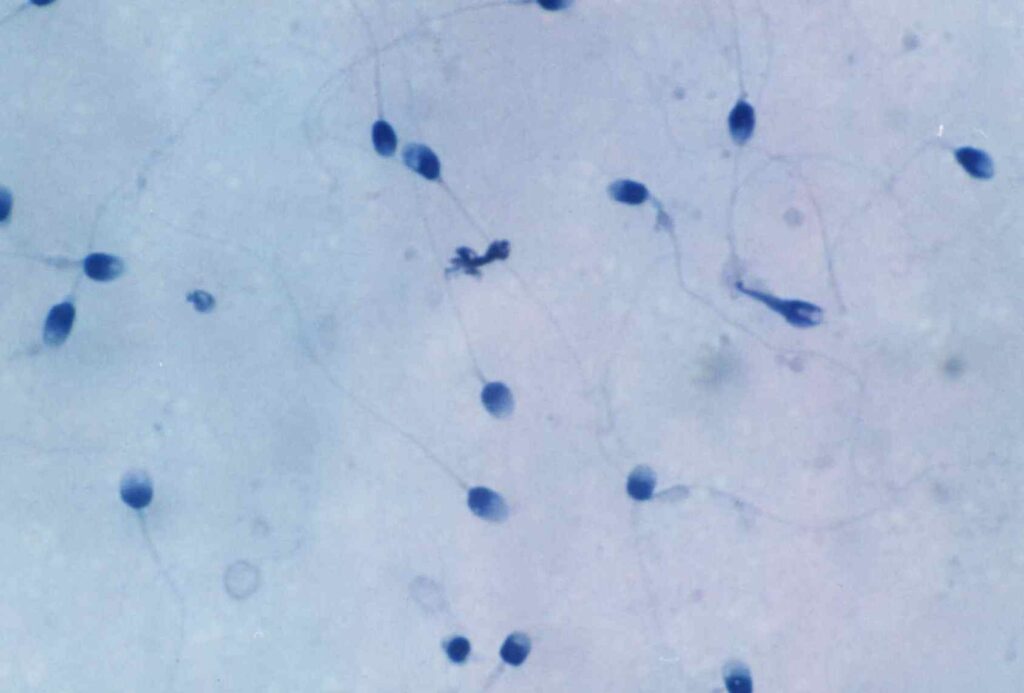
In assisted reproduction, sperm selection has traditionally focused on visible parameters such as motility and morphology. These criteria remain essential, but a growing body of research suggests that they may not fully capture the functional competence of sperm cells.
A recent study published in the Journal of Assisted Reproduction and Genetics explored whether a more physiological approach to sperm selection could improve embryo development in ICSI cycles. The study evaluated cumulus cell-mediated sperm selection, a strategy inspired by the natural interaction between sperm and the oocyte microenvironment.
Why sperm selection matters beyond motility
Conventional sperm preparation methods, including density gradient centrifugation and swim-up, are widely used in IVF laboratories to recover motile sperm. These methods are effective and well-established, but motility alone does not necessarily indicate whether a sperm cell is optimally prepared to support embryonic development.
Sperm competence depends on several biological factors, including capacitation status, membrane functionality, mitochondrial activity, DNA integrity, and the ability to interact with the oocyte.
In natural conception, the female reproductive tract acts as a highly selective environment, filtering sperm through complex biochemical and physical mechanisms before fertilization occurs. During ICSI, many of these natural selection steps are bypassed.
This is one reason researchers are increasingly interested in biomimetic sperm selection strategies: laboratory methods designed to partially reproduce the physiological conditions sperm encounter in vivo.
The role of cumulus cells in physiological sperm selection
Cumulus cells surround the oocyte and play an active role in the fertilization process. They release signaling molecules involved in sperm capacitation, hyperactivation, acrosome reaction, and sperm-oocyte interaction.
In the recent clinical study, researchers compared conventional sperm preparation with cumulus cell-mediated sperm selection in ICSI cycles. The study analyzed 99 ICSI cycles using a sibling-oocyte design, allowing oocytes from the same cycle to be allocated to different sperm selection conditions.
The main finding was a significant increase in the proportion of good-quality day-5 blastocysts in the cumulus-selection group compared with the control group: 55.2% versus 45.3%.
Importantly, fertilization and pregnancy rates did not differ significantly between groups. This suggests that sperm selection may influence embryo development, but it also reinforces the need to interpret the results with scientific caution.
What this means for IVF laboratories
These findings highlight an important shift in assisted reproduction: sperm selection may need to evolve from simply identifying sperm that move well to identifying sperm that are functionally prepared to support embryo development.
For IVF laboratories, this raises a relevant question:
Should sperm preparation methods move closer to biological selection processes?
While ICSI has become highly efficient at achieving fertilization, embryo competence depends on more than fertilization alone. The sperm cell contributes biological information and functional properties that may influence embryo development beyond the moment of injection.
This does not mean that sperm selection alone explains embryo quality. Oocyte quality, maternal age, paternal age, culture conditions, laboratory workflow, and clinical factors all contribute to ART outcomes.
However, the study adds to the growing evidence that sperm physiology deserves greater attention in the IVF laboratory.
Toward more biology-driven sperm preparation
At Fecundis, this concept is central to our scientific approach: moving beyond conventional sperm recovery methods toward technologies designed to better support sperm physiology and functional competence.
The future of sperm preparation may not be defined only by recovery, motility, or morphology. It may be defined by how well laboratory methods preserve and support the biological functions that sperm need to contribute to embryo development.
Biology-inspired sperm selection is not just a technical improvement. It reflects a broader movement in assisted reproduction: bringing the laboratory closer to the mechanisms that nature already uses.
Reference
Ten J. et al. Cumulus cell-mediated sperm selection enhances blastocyst quality using sibling oocytes. Journal of Assisted Reproduction and Genetics. 2026.
Source: https://link.springer.com/article/10.1007/s10815-026-03818-0